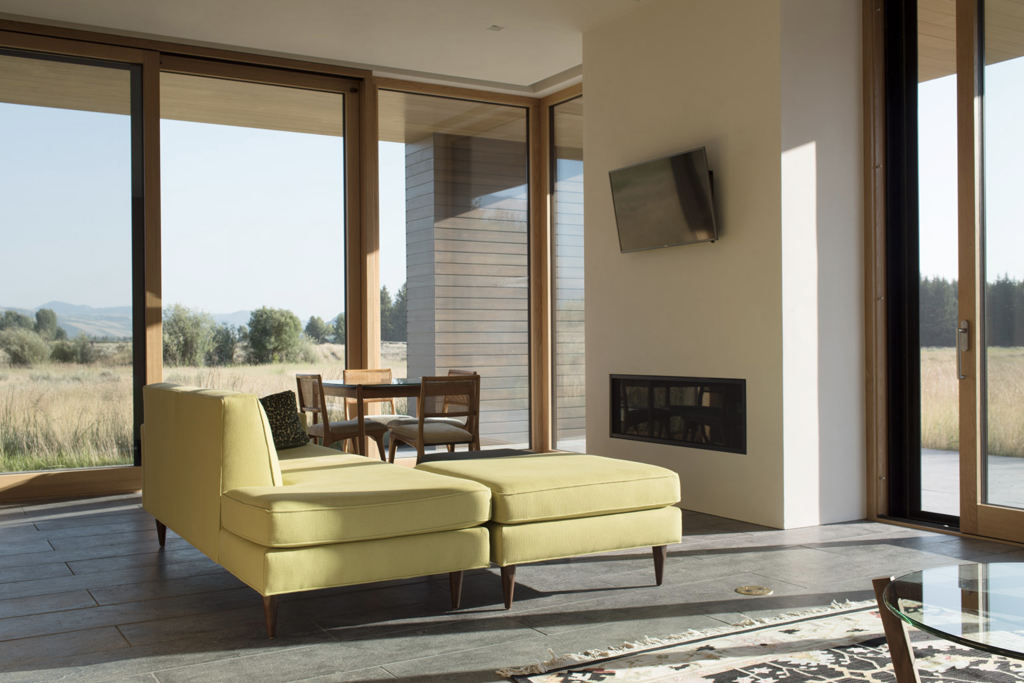
A north-facing room presents one of the more persistent challenges in residential design. Without direct sun exposure at any point during the day, these spaces receive only reflected and diffused daylight, which tends to feel cooler, flatter, and dimmer than rooms oriented toward the south, east, or west. Yet north-facing rooms are far from a lost cause. With the right combination of window design, surface treatments, and spatial planning, they can feel genuinely luminous rather than merely tolerable. Understanding why the light behaves the way it does is the best starting point for changing it.
Why north-facing rooms receive less natural light
In the Northern Hemisphere, the sun travels across the southern half of the sky throughout the year. South-facing windows catch direct sunlight for hours each day, while east- and west-facing windows receive it in the morning and afternoon respectively. North-facing windows, by contrast, never receive direct sun. What they do receive is indirect daylight: the ambient, scattered light reflected from the sky and surrounding surfaces. This light is consistent and even, which is why north-facing studios have long been prized by painters, but it lacks the intensity and warmth that most people associate with a bright, inviting room.
The quality of that indirect light also shifts with the seasons. In winter, when the sun stays low and the days are short, a north-facing room can feel genuinely gloomy. In summer, the higher sun angle means more sky brightness overall, and the room benefits accordingly, but it still won’t receive the direct rays that flood a south-facing space. Addressing natural light in a north-facing room means working with this consistent but low-intensity source rather than trying to replicate what the sun does naturally on the other side of the house.
Window size, placement, and glazing that maximize daylight
The most direct way to bring more daylight into a north-facing room is to increase the amount of sky visible from inside it. Larger windows admit more diffused light, and in a north-facing orientation, this means prioritizing window area wherever the building envelope and structure allow. Tall windows that reach close to the ceiling are particularly effective because they allow reflected light from the sky’s upper zone, which is typically brighter, to penetrate deeper into the room.
Placement matters as much as size. A single large window centered in a wall captures less total sky than two windows positioned toward opposite corners of the same wall, because corner placement widens the angle of visible sky. Clerestory windows, positioned high on the wall or at the junction of a vaulted ceiling, can bring in reflected light from angles that standard windows miss entirely. Skylights, where the roof structure permits, are among the most effective tools for brightening a north-facing space, since they draw from the full sky rather than a narrow vertical slice of it.
Glazing specification deserves careful attention in this context. High-visible-light-transmittance (VLT) glass allows more of the available daylight spectrum through the pane, which matters significantly when that daylight is already limited. In a south-facing room, a lower VLT might be appropriate to manage glare and heat gain. In a north-facing room, the priority shifts toward transmittance. Triple-glazed units with high-performance low-e coatings can be specified to retain thermal performance without sacrificing the light transmission that these rooms depend on. Consulting with a window manufacturer during the design phase, rather than treating glazing as a late-stage specification, pays dividends here.
Interior surfaces and finishes that amplify available light
Once daylight enters a north-facing room, how far it travels and how bright the space feels depends heavily on what it hits first. Light-colored surfaces with high reflectance values bounce daylight from wall to wall and ceiling to floor, multiplying the effect of every lumen that enters through the window. This is not simply a matter of painting walls white: the finish matters as much as the color. Matte finishes scatter light diffusely, which reduces glare and creates an even glow, while semi-gloss finishes on ceilings can act almost like a secondary light source, redirecting daylight downward into the room.
Flooring choices have a significant effect that is often underestimated. Dark hardwood or stone floors absorb light rather than reflecting it, while lighter wood tones, pale stone, or large-format light-toned tile keep the lower half of the room contributing to the overall brightness. In rooms where flooring cannot be changed, large area rugs in warm off-white or light neutral tones achieve a similar result without a full renovation.
Mirror placement is one of the more powerful tools available without structural changes. A mirror positioned on the wall opposite or adjacent to the window effectively creates a second light source, reflecting the window’s view of the sky back into the room. This works best when the mirror is large enough to capture a meaningful portion of the window rather than just a sliver of it. Glossy or metallic decorative surfaces, from lacquered cabinetry to polished hardware, contribute smaller but cumulative reflective effects throughout the space.
Layout and furniture strategies for brighter north-facing spaces
The arrangement of furniture directly affects how light moves through a room. Large, tall pieces placed near or in front of windows block the path of incoming daylight before it has a chance to travel into the space. Keeping the zone immediately adjacent to north-facing windows clear, or furnished only with low, open pieces, allows light to reach the floor and walls unobstructed.
Furniture color and material also play a role. Upholstery in light or warm tones reflects ambient light rather than absorbing it, and open-frame furniture, such as chairs with visible legs and thin profiles, creates less visual mass and allows light to pass beneath and around it. In a north-facing room, the goal is to avoid concentrating visual weight near the window wall, since that is where the available light originates.
Window treatments deserve particular thought. Heavy curtains or deep pelmets that frame north-facing windows reduce the effective glazed area and block reflected sky light from entering at oblique angles. Sheer panels, if privacy is needed, transmit far more daylight than lined drapes. In many high-end residential projects, north-facing windows are left entirely unframed by soft furnishings, allowing the full glazed area to work at maximum efficiency. The window profile design itself contributes here too: slimmer frame profiles leave more of the opening as glass, which matters most precisely in the orientations where every lumen counts.
How wood and wood-aluminum windows enhance light quality
The material and construction of the window frame affects not just the quantity of light entering a room but the character of it. Wood frames have a natural warmth that interacts with diffused north light in a way that aluminum or uPVC does not. The grain and tone of the wood surrounding the glazed opening subtly warm the color temperature of the incoming light, counteracting the slightly cool, blue-shifted quality that north-facing daylight tends to carry. This is a perceptual effect rather than a measurable one, but it is consistently noted by architects and their clients in completed projects.
From a technical standpoint, wood and wood-aluminum window systems can be engineered to maximize glazed area without sacrificing structural performance or thermal values. Slender sightlines, achieved through high-density timber species and precise joinery, mean that more of the rough opening is occupied by glass rather than frame. In a north-facing room where every square inch of glazing contributes to the ambient light level, this is a meaningful design advantage. Wood window systems built to passive house standards also eliminate condensation on interior surfaces, which in cooler, lower-light rooms would otherwise further reduce the sense of brightness and spatial quality.
How Bildau & Bussmann approaches north-facing room design
Bildau & Bussmann manufactures wood and wood-aluminum windows and doors designed from the outset for projects where light quality, thermal performance, and material character are non-negotiable. For architects working on north-facing rooms in high-end residential projects, the company’s capabilities are directly relevant:
- Custom profile dimensions that minimize frame width and maximize glazed area, specified to the architect’s exact sightline requirements
- High-performance glazing specifications with elevated visible light transmittance, combined with triple-pane insulation values that meet or exceed passive house standards
- Wood-aluminum systems that bring warm natural wood to the interior face while the aluminum exterior shell provides full weather resistance and near-zero maintenance, available in all RAL colors
- Large-format lift-and-slide door systems that replace entire wall sections, transforming a north-facing wall into a full-width glazed opening that dramatically increases the sky visible from inside the room, with sash weights up to 600 kg moving on a single handle
- Corner configurations where sashes retract to open two walls simultaneously, removing the boundary between interior and exterior entirely
Every element is custom-built to specification and manufactured with the precision of a company that has been producing architecturally demanding wood windows since 1987. Architects working on projects where north-facing orientation is a design constraint, rather than a limitation to work around, are welcome to contact Bildau & Bussmann directly to discuss glazing strategy and profile options from the early planning phase.