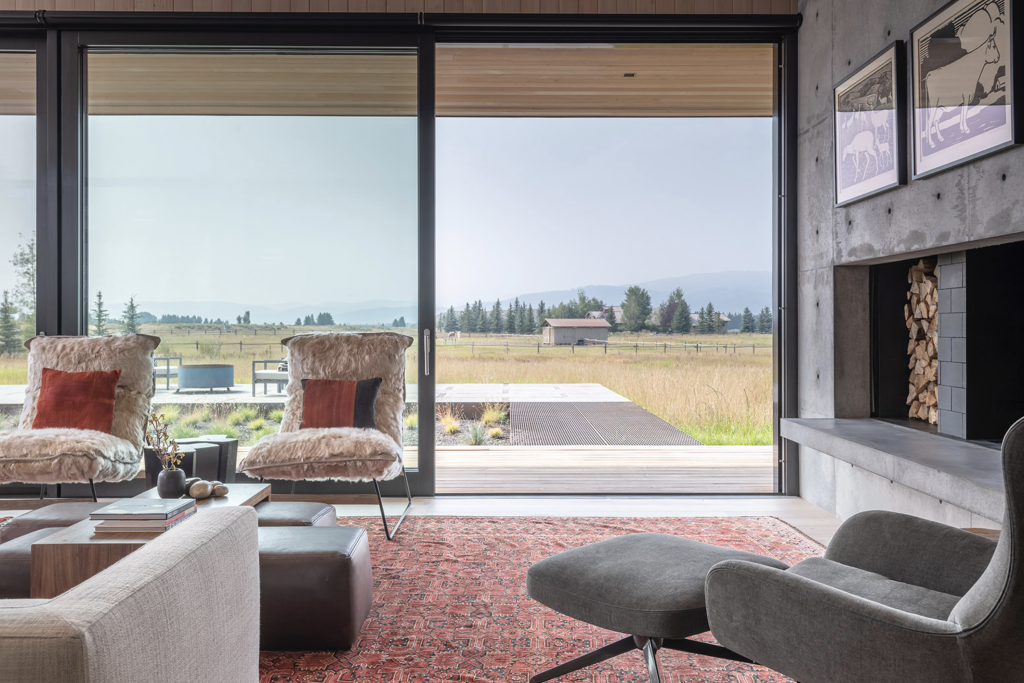
A pocket sliding door solves one of the most persistent tensions in residential architecture: how to separate two spaces without sacrificing the openness that makes a room feel generous. Unlike a standard sliding door that parks against the wall when open, a pocket door disappears entirely into the wall cavity, leaving the opening completely clear. For architects working on high-end residential projects, that distinction matters both aesthetically and functionally.
The mechanics behind a pocket sliding door are straightforward, but the design decisions surrounding glazing, panel size, and frame material are anything but. Understanding how these systems actually work helps clarify which configurations suit which architectural conditions.
How a pocket sliding door actually moves
A pocket sliding door operates on a track system mounted within or above the wall structure. When opened, the door panel slides laterally into a concealed cavity built into the wall, known as the pocket. The panel hangs from a top-mounted track, which carries the weight of the door and guides its movement. Floor guides keep the bottom edge aligned without requiring a floor track that would interrupt the floor plane.
The wall pocket itself is framed during construction, typically doubling the width of the rough opening to accommodate the door panel in its retracted position. Because the pocket must house the full panel width, structural planning happens early in the design process. Load-bearing walls require additional engineering to create the cavity without compromising structural integrity, which is why pocket door integration is almost always a decision made at the architectural drawing stage rather than retrofitted later.
Where the glass goes when the door is open
When a glass pocket door slides open, the glazed panel moves fully into the wall cavity. From the perspective of someone standing in the room, the glass simply vanishes. The opening reads as a clean, uninterrupted threshold with no panel visible on either side.
This is what separates a pocket door from a standard sliding door in architectural terms. A conventional sliding door, even a high-performance one, leaves the panel resting against the wall face when open, which occupies wall space and limits furniture placement nearby. With a pocket configuration, the wall remains usable on both sides of the opening, and the transition between rooms or between interior and exterior feels genuinely seamless rather than merely convenient.
Glass configurations and panel sizes
The glazing in a pocket sliding door follows the same logic as any large-format door system: the goal is typically to maximize the glass area relative to the frame. Floor-to-ceiling glass doors are particularly common in high-end residential applications, where the priority is connecting interior living spaces to terraces, gardens, or landscape views without visual interruption.
Single-panel pocket doors work well for interior room dividers, where the opening width is typically between 80 cm and 120 cm. For larger openings, two panels sliding into opposite wall pockets create a wider clear span when both are retracted. Glazing options include standard double- or triple-insulating glass units, with triple glazing generally preferred in climates where thermal performance is a priority. Laminated safety glass is standard for floor-level panels, and acoustic interlayers are available where sound separation between spaces matters.
Panel height is one of the more consequential decisions. Taller panels require more robust hardware and heavier-duty track systems, but the visual payoff is significant. A floor-to-ceiling glass door that disappears into the wall creates a quality of openness that shorter panels simply cannot replicate.
Wood and wood-aluminum frames for pocket doors
Frame material affects both performance and longevity in a pocket door system, and the choice between solid wood and wood-aluminum construction involves trade-offs worth understanding clearly.
Solid wood frames offer warmth, natural variation in grain and color, and a quality of material presence that engineered alternatives rarely match. Wood also performs well thermally and can be profiled to precise architectural specifications. The consideration with wood in a pocket door context is maintenance: because the panel spends much of its time inside the wall cavity, any moisture accumulation in the pocket needs to be managed carefully to prevent warping or swelling that could affect smooth operation.
Wood-aluminum systems address the exterior exposure concern directly. An aluminum outer shell protects the wood from weather on the exterior face while leaving the interior surface in natural wood. This construction is particularly well suited to high-performance door systems where the panel transitions between conditioned interior space and an exposed exterior environment. The aluminum cladding is available in a wide range of surface finishes and RAL colors, which gives architects flexibility in matching the exterior palette without sacrificing the warmth of wood on the inside.
Architectural applications in high-end residential projects
Pocket sliding doors appear most frequently in high-end residential projects where the architecture prioritizes spatial continuity. Living rooms that open onto covered terraces, primary suites that connect to private outdoor spaces, and open-plan interiors where rooms need to be divisible without feeling closed off are all natural candidates.
In mountain and coastal residential projects, where the relationship between interior comfort and exterior landscape is central to the design concept, a glass pocket door offers something a standard door system cannot: the ability to make the boundary between inside and outside effectively disappear. When the panel is retracted, the room extends visually and physically into the landscape. When closed, the same panel provides thermal separation, acoustic privacy, and weather resistance.
The architectural projects where pocket doors perform best are those where the wall thickness has been planned to accommodate the cavity from the start. Retrofitting a pocket door into an existing wall is possible but often requires significant structural work. In new construction, the additional wall depth is a straightforward planning consideration that pays dividends in the quality of the finished space.
How Bildau & Bussmann approaches pocket sliding door systems
Bildau & Bussmann manufactures large-format lift-and-slide doors in both solid wood and wood-aluminum construction, including configurations where the sash panels retract fully into a wall pocket. Every element is custom-built to the architect’s specifications, which means panel dimensions, glazing specifications, frame profiles, and hardware details are all determined by the project rather than by a standard product catalog.
For architects working on high-end residential projects, the practical advantages include:
- Custom panel sizes up to the full height of the wall, with sash weights accommodated by precision lift-and-slide hardware
- Wood-aluminum construction that delivers passive house-level thermal performance alongside near-zero exterior maintenance
- Aluminum cladding available in all RAL colors and a range of surface textures, with the interior face in natural wood
- Corner configurations and multi-panel arrangements available for complex openings
- Wind and rain tightness suitable for exposed coastal and mountain sites
Bildau & Bussmann works with architects from the early planning phase through installation, which matters particularly for pocket door systems where wall cavity dimensions and structural coordination need to be resolved before framing begins. To discuss a specific project or request technical documentation, get in touch with the team directly.